When Should You Get a Prostate Cancer Screening at a Urology Clinic in Ilbong-dong?
Why is Proactive Prostate Screening Essential for Men’s Health?
Prostate health often remains overlooked until physical symptoms begin to disrupt daily life. Prostate cancer is a progressive malignant neoplasm arising from the glandular epithelial cells of the prostate, which can obstruct the prostatic urethra and metastasize to bones if left undetected. Because early-stage prostate cancer rarely exhibits visible warning signs, relying solely on symptoms like urinary hesitancy or weak flow can delay life-saving treatment. Seeking timely evaluation at a dedicated urology clinic in Ilbong-dong ensures that early diagnostic indicators are caught before the disease progresses beyond the prostatic capsule.
Treatment timing: Routine annual screening is strongly recommended starting at age 50, or at age 40 for individuals with a first-degree relative diagnosed with prostate malignancies.
Non-surgical care: For low-risk, slow-growing cases with a Gleason score of 6 or less and stable PSA levels, active surveillance and conservative monitoring remain highly reasonable alternatives to immediate surgery.
Treatment selection: Therapeutic decisions are determined based on a comprehensive analysis of patient age, anatomical prostate volume, histopathological risk levels, and patient recovery expectations.

What Are the Core Screening and Diagnostic Methods?
According to multiple observational studies and meta-analyses, including data compiled by the National Cancer Institute (2022), the integration of biochemical assays and physical examinations significantly increases the sensitivity of early prostate cancer detection. Rather than relying on a single test, urological specialists combine several diagnostic tools to achieve an accurate assessment. This systematic approach minimizes the rate of false positives while ensuring that aggressive localized tumors are not missed.
When presenting at an Ilbong-dong urology clinic, patients typically undergo a combination of a blood-based Prostate-Specific Antigen (PSA) test, a Digital Rectal Exam (DRE), and, if necessary, advanced imaging or biopsy. Below is a comparative overview of these standard diagnostic modalities:
| Diagnostic Tool | Primary Purpose | Key Advantage | Key Limitation |
|---|---|---|---|
| PSA Blood Test | Measures the level of prostate-specific antigen protein in the blood. | Highly sensitive; simple blood draw with minimal patient discomfort. | Can be elevated by benign conditions like BPH or prostatitis. |
| Digital Rectal Exam (DRE) | Physical palpation of the posterior prostate wall to detect nodules. | Allows direct physical assessment of prostate texture and firmness. | Subjective; cannot detect small tumors located deep inside the tissue. |
| Multiparametric MRI | Advanced magnetic imaging to map suspicious focal areas (PI-RADS). | Highly accurate in distinguishing clinically significant lesions. | Higher diagnostic costs and limited accessibility in some settings. |
According to official guidelines from the American Urological Association (2023), prostate cancer screening decisions must involve a shared decision-making process, combining quantitative PSA thresholds with personalized clinical judgment regarding the patient’s overall life expectancy and health status.
However, outcomes may differ in exceptional cases such as patients presenting with acute bacterial prostatitis, where transiently spiked PSA levels exceeding 10 ng/mL do not necessarily correlate with underlying oncology but require temporary antimicrobial therapy followed by a re-test.
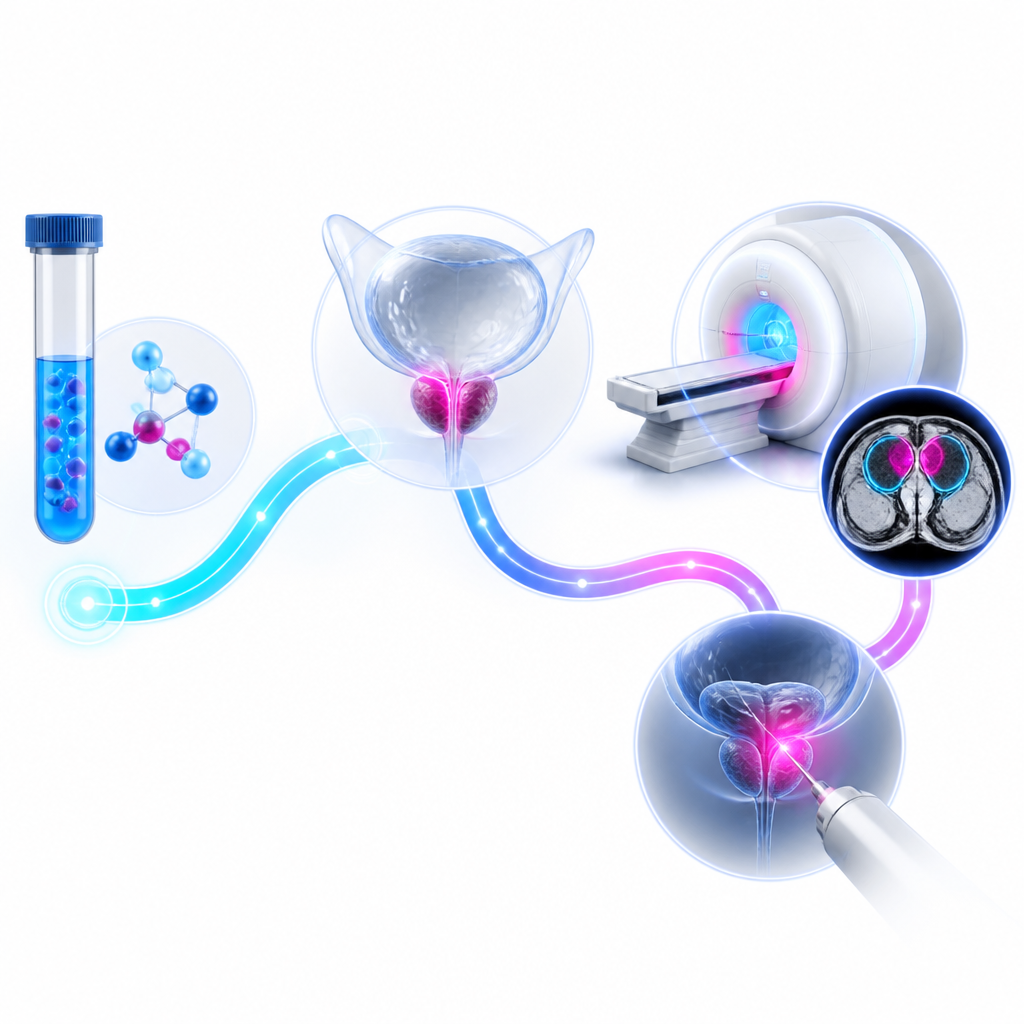
How Do We Analyze Elevated PSA Levels and Decide Next Steps?
An elevated PSA reading can cause significant anxiety. However, a high score does not automatically confirm cancer. Urology specialists use a refined, step-by-step diagnostic pathway to avoid unnecessary biopsies while ensuring critical diagnoses are not delayed. If you reside in the Ilbong-dong area, consulting an experienced urologist can help clarify these test dynamics.
To determine if an elevated PSA requires a prostate biopsy, specialists look at several key clinical indicators:
- PSA Velocity: The rate of PSA increase over a 12-month period.
- Free-to-Total PSA Ratio: A lower ratio (often under 10-15%) increases the clinical suspicion of malignancy.
- Prostate Volume Adjusted PSA (PSA Density): Higher density suggests a greater likelihood of a tumor rather than benign hypertrophy.
- Family History and Genetics: Presence of BRCA gene mutations or direct paternal/fraternal history.
- PI-RADS Scoring: Lesion classifications on multiparametric MRI scoring from 1 (very low) to 5 (very high risk).
To assist patients in visualizing the clinical path, urologists utilize an If-Then Decision Flow:
- Step 1: If the initial PSA is borderline (between 4.0 and 10.0 ng/mL) and there are no acute symptoms, then a repeat PSA test is scheduled in 4 to 8 weeks alongside a free-to-total PSA ratio evaluation.
- Step 2: If the PSA remains elevated or DRE findings are abnormal, then a multiparametric MRI of the prostate is recommended to localize any potential lesions.
- Step 3: If the MRI reveals a PI-RADS score of 3 or higher, then a targeted transrectal or transperineal fusion biopsy is performed under local or general anesthesia.
Frequently Asked Questions FAQ
QDoes a high PSA level mean I definitely have prostate cancer?
No. While PSA is prostate-specific, it is not cancer-specific. Benign Prostatic Hyperplasia (BPH), urinary tract infections, recent ejaculation, or physical trauma to the pelvic area can also cause transient elevations in PSA. A urological specialist at 굿모닝비뇨기과 will evaluate your individual history and perform secondary tests before recommending a biopsy.
QWhat is active surveillance and when is it appropriate?
Active surveillance is a conservative management strategy for low-risk, slow-growing prostate cancers. Instead of undergoing immediate surgery or radiation, the patient is closely monitored through regular PSA blood tests, DREs, and periodic repeat biopsies. This approach helps patients avoid potential treatment side effects like urinary incontinence or erectile dysfunction, provided the cancer remains localized and non-aggressive.
QAre there preventive lifestyle measures I can take for prostate health?
Yes. Although genetics play a major role, maintaining a diet rich in lycopene (found in cooked tomatoes), cruciferous vegetables, and healthy fats while reducing processed red meat intake can support overall prostate health. Regular cardiovascular exercise and maintaining a healthy body weight are also associated with a lower risk of developing advanced prostate diseases.

This content is general medical information, and individual treatment decisions should be made through imaging tests and in-person medical evaluation.
Author: Medical content editor based on medical information research
Reviewed by: Specialist consultation from the relevant department
Last reviewed: 2026-07-06
Reference guideline: American Urological Association (AUA) Prostate Cancer Screening Guidelines 2023
Medical neutrality and closing note
The core of medical decision-making is not to follow a specific device or a trending procedure, but to choose an option that fits each patient’s individual anatomy, condition, risk level, and treatment goals. Every procedure has both advantages and limitations, so decisions should be made after sufficient discussion with an experienced specialist.
[Medical information and copyright notice]
This content is a professional medical column prepared based on medical consultation from 굿모닝비뇨기과.
The infographics used in this article are created to support understanding and may differ from actual clinical results.
The information provided is a general medical guideline, and accurate diagnosis and treatment require an in-person evaluation by a qualified specialist.