When is Benign Prostatic Hyperplasia Surgery Necessary? A Clinical Guide from a Urology Specialist in Munseong-dong
Are You Experiencing Frequent Nighttime Urination and Weak Stream in Munseong-dong?
Many men over the age of fifty attribute worsening urinary difficulties to the inevitable process of aging. However, persistent nocturia, hesitance, and a weak urinary stream are primary clinical signs of structural changes in the prostate gland. If you are living in Munseong-dong and experiencing these highly disruptive symptoms, understanding when conservative management is sufficient and when it is time to seek surgical intervention from a urology specialist is critical for protecting long-term bladder health.
Treatment timing: Surgical decompression is recommended when post-void residual urine consistently exceeds 150 mL, or when complications such as bladder stones, hematuria, or recurrent urinary tract infections occur.
Non-surgical care: Conservative management—including combination pharmacotherapy with alpha-blockers and 5-alpha-reductase inhibitors—remains reasonable for mild-to-moderate symptoms where renal function is preserved and the detrusor muscle is healthy.
Treatment selection: Modern therapeutic decisions are guided by precise anatomical prostate volume, the patient’s cardiovascular risk profile, and individual expectations regarding the preservation of ejaculatory function.
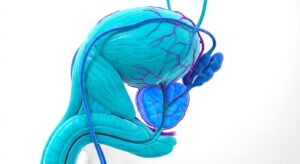
How Does Benign Prostatic Hyperplasia Anatomically Affect Your Bladder?
Benign prostatic hyperplasia (BPH) is a progressive disease characterized by the non-malignant proliferation of epithelial and stromal cells in the prostatic transitional zone, which mechanically compresses the prostatic urethra and leads to detrusor muscle hypertrophy and secondary bladder outlet obstruction. As the obstruction persists, the detrusor muscle must work harder to expel urine, leading to bladder wall thickening and trabeculation. Over time, this chronic pressure can trigger detrusor instability, manifesting as sudden, uncontrollable urgency and severe nocturia. If left untreated, the progressive nature of BPH can lead to irreversible detrusor failure, meaning that even a late surgical correction may not fully restore normal voiding function.
Can Medications and Lifestyle Adjustments Delay the Need for Surgery?
For patients experiencing mild to moderate symptoms (typically defined as an International Prostate Symptom Score, or IPSS, of less than 19), initial active surveillance combined with targeted lifestyle modifications is highly effective. Restricting fluid intake two hours before sleep, avoiding bladder irritants such as caffeine and alcohol, and employing double voiding techniques can significantly improve daily comfort. Pharmacologically, combined therapy using alpha-1 adrenergic blockers (to relax the smooth muscle of the bladder neck and prostate) and 5-alpha-reductase inhibitors (to reduce prostate volume by inhibiting dihydrotestosterone production) is the gold standard. These non-surgical options are highly reasonable as long as renal function tests are stable, post-void residual (PVR) urine volume stays under 100 mL, and the patient does not experience sudden urinary retention.
What Are the Decisive Criteria for Transitioning to BPH Surgery?
According to domestic and international clinical guidelines, such as those updated by the American Urological Association (AUA) in 2023, surgical intervention is strongly indicated when conservative management fails or when absolute clinical complications arise. These absolute indications include refractory urinary retention (the complete inability to urinate), recurrent urinary tract infections (UTIs) caused by chronic urine stasis, persistent gross hematuria originating from engorged prostatic veins, or secondary bladder calculi. Furthermore, when post-void residual (PVR) urine consistently exceeds 150 mL, the resulting backpressure can lead to bilateral hydronephrosis and progressive renal insufficiency. According to multiple observational studies and meta-analyses published in PubMed (2022), patients who undergo surgery before severe bladder wall damage occurs show a 92% improvement in voiding efficiency compared to only 64% in those who delayed treatment until chronic urinary retention developed.
| Treatment Option | Clinical Advantage | Limitation & Disadvantage |
|---|---|---|
| Pharmacotherapy (Combo) | Non-invasive; easily managed with daily oral medication. | Requires lifelong adherence; risk of systemic side effects like orthostatic hypotension. |
| Prostatic Urethral Lift | Preserves sexual and ejaculatory function; rapid recovery. | Not suitable for very large prostates (>80 mL) or median lobe obstruction. |
| Laser Enucleation (HoLEP) | Highly effective for any prostate size; exceptionally low recurrence rate (<1% over 10 years). | Requires general or spinal anesthesia; high rate of transient retrograde ejaculation. |
According to official guidelines from the European Association of Urology (EAU 2023), both objective urodynamic pressure-flow criteria and subjective quality of life measures must be evaluated dynamically before finalizing any surgical pathway.
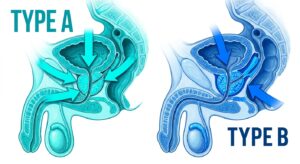
How Do Specialists Determine the Most Effective Surgical Method?
When you consult a specialized urology clinic in Munseong-dong, a comprehensive diagnostic workup is performed to map your specific anatomy. Transrectal ultrasonography (TRUS) is utilized to measure the exact volume of your prostate and to evaluate for the presence of a protruding median lobe. If the prostate volume is under 80 mL and the patient is highly concerned with preserving sexual function, minimally invasive mechanical options are carefully evaluated. However, for severe prostatic hyperplasia exceeding 80 mL, transurethral resection of the prostate (TURP) or advanced Holmium Laser Enucleation of the Prostate (HoLEP) offers the most durable tissue reduction. However, outcomes may differ in exceptional cases such as patients with severe neurogenic bladder dysfunction, uncontrolled bleeding disorders, or prior pelvic radiation therapy, where typical bladder pressure recovery cannot be fully guaranteed.
To help patients in Munseong-dong navigate their symptoms, the following checklist highlights critical signs that suggest conservative care may no longer be sufficient:
- Persistent waking more than 3 times per night to urinate (severe nocturia)
- A continuous sensation of incomplete emptying immediately after voiding
- Sudden, uncontrollable urinary urgency that leads to urge incontinence
- Repeated episodes of urinary tract infection within a 12-month period
- Visible blood in the urine (hematuria) without associated trauma
Decision Flow for BPH Patients:
- If your IPSS score is below 19 and post-void residual urine is under 100 mL, Then proceed with active lifestyle modifications and combination medication therapy.
- If medical therapy fails to resolve severe nocturia or PVR rises between 100-150 mL, Then schedule a detailed urodynamic evaluation and transrectal ultrasound.
- If absolute complications like urinary retention, bladder stones, or kidney strain occur, Then immediately prepare for surgical decompression to protect renal health.
Frequently Asked Questions FAQ
QIs benign prostatic hyperplasia surgery painful, and how long is the hospital stay?
Modern laser-based procedures such as HoLEP are performed under spinal or general anesthesia, meaning no discomfort is felt during the procedure itself. Post-operative discomfort is generally mild and easily managed with standard oral analgesics. Most patients require a temporary urinary catheter for only 1 to 2 days, and hospital discharge is common within 48 to 72 hours following catheter removal, allowing a fast return to light daily activities.
QCan BPH recur after undergoing surgical treatment?
The risk of recurrence depends heavily on the chosen surgical modality. Traditional transurethral resection (TURP) has a long-term retreatment rate of approximately 5% to 8% over ten years. In contrast, advanced enucleation methods like HoLEP completely remove the hyperplastic tissue down to the surgical capsule, resulting in an exceptionally low recurrence rate of less than 1% over a 10-year follow-up period. Periodic annual checkups are still recommended to monitor overall bladder health.
QAre there urology clinics in Munseong-dong equipped to perform these advanced diagnostic evaluations?
Yes, patients seeking care in Munseong-dong can receive state-of-the-art diagnostic evaluations—including transrectal ultrasound, uroflowmetry, and post-void residual volume testing—at 굿모닝비뇨기과. These clinical tools allow specialists to formulate customized treatment plans tailored to your specific anatomical criteria and health goals.

This content is general medical information, and individual treatment decisions should be made through imaging tests and in-person medical evaluation.
Author: Medical content editor based on medical information research
Reviewed by: Specialist consultation from the relevant department
Last reviewed: 2026-06-26
Reference guideline: 2023 American Urological Association (AUA) Guideline on Management of Benign Prostatic Hyperplasia
Medical neutrality and closing note
The core of medical decision-making is not to follow a specific device or a trending procedure, but to choose an option that fits each patient’s individual anatomy, condition, risk level, and treatment goals. Every procedure has both advantages and limitations, so decisions should be made after sufficient discussion with an experienced specialist.
[Medical information and copyright notice]
This content is a professional medical column prepared based on medical consultation from 굿모닝비뇨기과.
The infographics used in this article are created to support understanding and may differ from actual clinical results.
The information provided is a general medical guideline, and accurate diagnosis and treatment require an in-person evaluation by a qualified specialist.