Is Comfort-Optimized Flexible Cystoscopy Effective for Bladder Cancer Screening in Urology?
Why Does Fear of Discomfort Delay Crucial Bladder Cancer Screening?
Early diagnostic intervention remains the cornerstone of favorable oncological outcomes. However, a significant proportion of patients presenting with red-flag symptoms, such as hematuria, delay seeking medical attention due to the anticipation of pain associated with traditional rigid cystoscopes. This hesitation is clinical cause for concern, as early-stage bladder cancer can progress rapidly if left undiagnosed.
Treatment timing: Early diagnostic screening is critical upon the first occurrence of macroscopic or microscopic hematuria to detect urothelial carcinoma at an early, highly manageable stage.
Non-surgical care: While non-invasive tests like urine cytology or biomarkers exist, they lack the sensitivity to rule out malignancy, making visual inspection via flexible cystoscopy indispensable when clinical suspicion is high.
Treatment selection: The choice between rigid and flexible cystoscopy is guided by patient anatomy, tolerance levels, the necessity of therapeutic intervention, and the urgency of clear visualization.
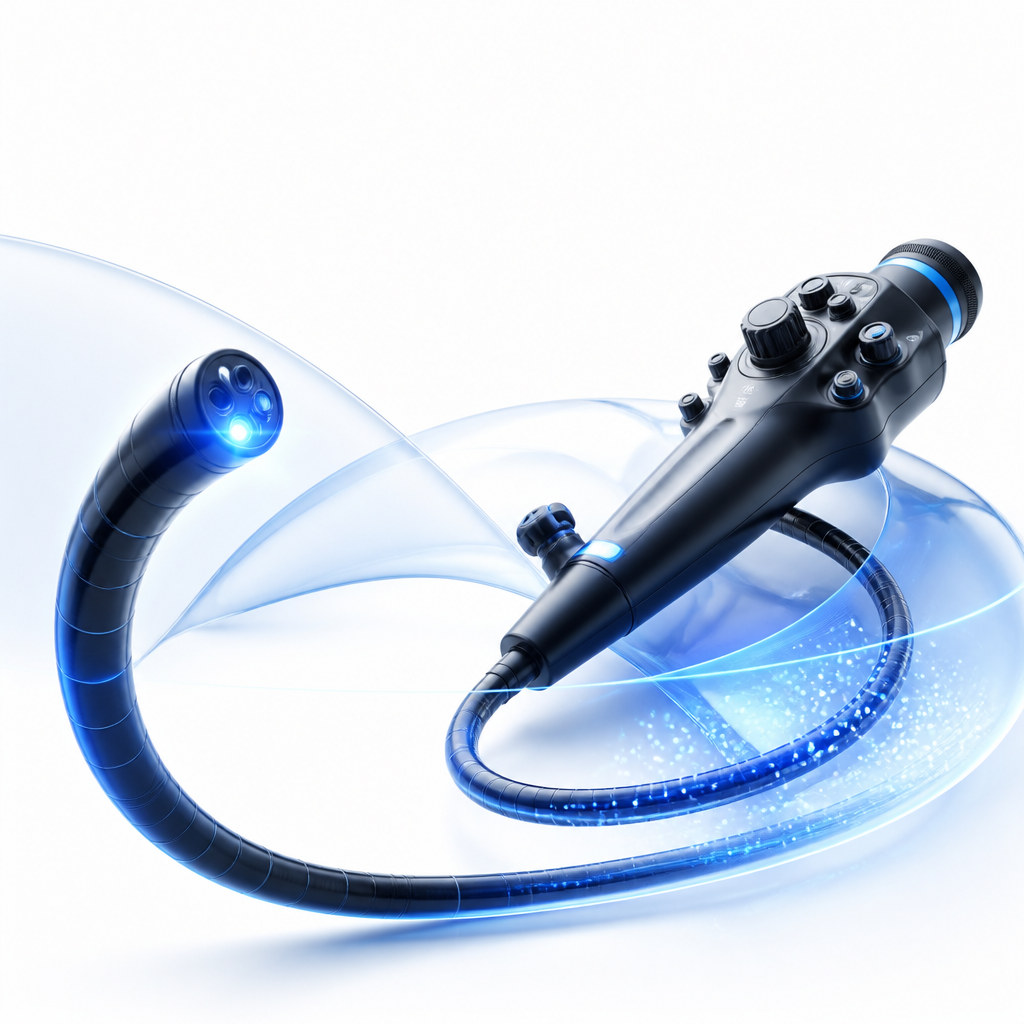
Rigid vs. Flexible Cystoscopy: How Technology Redefined Patient Comfort
To understand why modern diagnostic urology has shifted toward flexible instruments, it is necessary to examine the anatomical and pathophysiological context. Bladder cancer, primarily manifesting as urothelial carcinoma, is a progressive oncological disease originating in the transitional epithelium of the urinary tract. It frequently presents as painless, intermittent macroscopic hematuria, demanding a thorough visual sweep of the bladder wall.
Historically, rigid cystoscopy utilized a straight, unyielding metallic tube. This required significant force to bypass the natural curvature of the male urethra, necessitating local block, sedation, or even general anesthesia to manage patient distress. In contrast, the flexible cystoscope utilizes advanced fiber-optic or digital camera chips mounted on a highly pliable, steerable shaft. This allows the instrument to glide seamlessly along the anatomical contours of the urethra, minimizing tissue friction and vastly reducing mechanical pressure.
| Feature | Rigid Cystoscopy | Flexible Cystoscopy |
|---|---|---|
| Material & Design | Stiff, straight metallic tube | Soft, flexible, steerable fiber-optic tube |
| Patient Discomfort | Moderate to high (frequently requires sedation) | Minimal (well-tolerated under local lidocaine gel) |
| Visualization Range | Limited angles unless lens is changed | Up to 180-210 degree deflection for complete view |
| Primary Indication | Therapeutic interventions (biopsy, resection) | Diagnostic screening and surveillance |
According to official guidelines or academic evidence, both quantitative criteria and clinical judgment should be reviewed together.
According to multiple observational studies and meta-analyses, such as a landmark clinical study published in the Journal of Urology (2022), the diagnostic sensitivity of flexible cystoscopy for bladder tumors is approximately 96.5%, proving that patient comfort does not compromise diagnostic efficacy. Furthermore, flexible cystoscopy reduced patient-reported pain scores by over 60% compared to traditional rigid instruments, highlighting its role as a patient-centric diagnostic standard.
However, outcomes may differ in exceptional cases such as severe urethral strictures, active urinary tract infections, or massive hematuria with blood clots that obscure the field of view, where a rigid cystoscopy or alternative diagnostic approach under spinal anesthesia may be preferred.
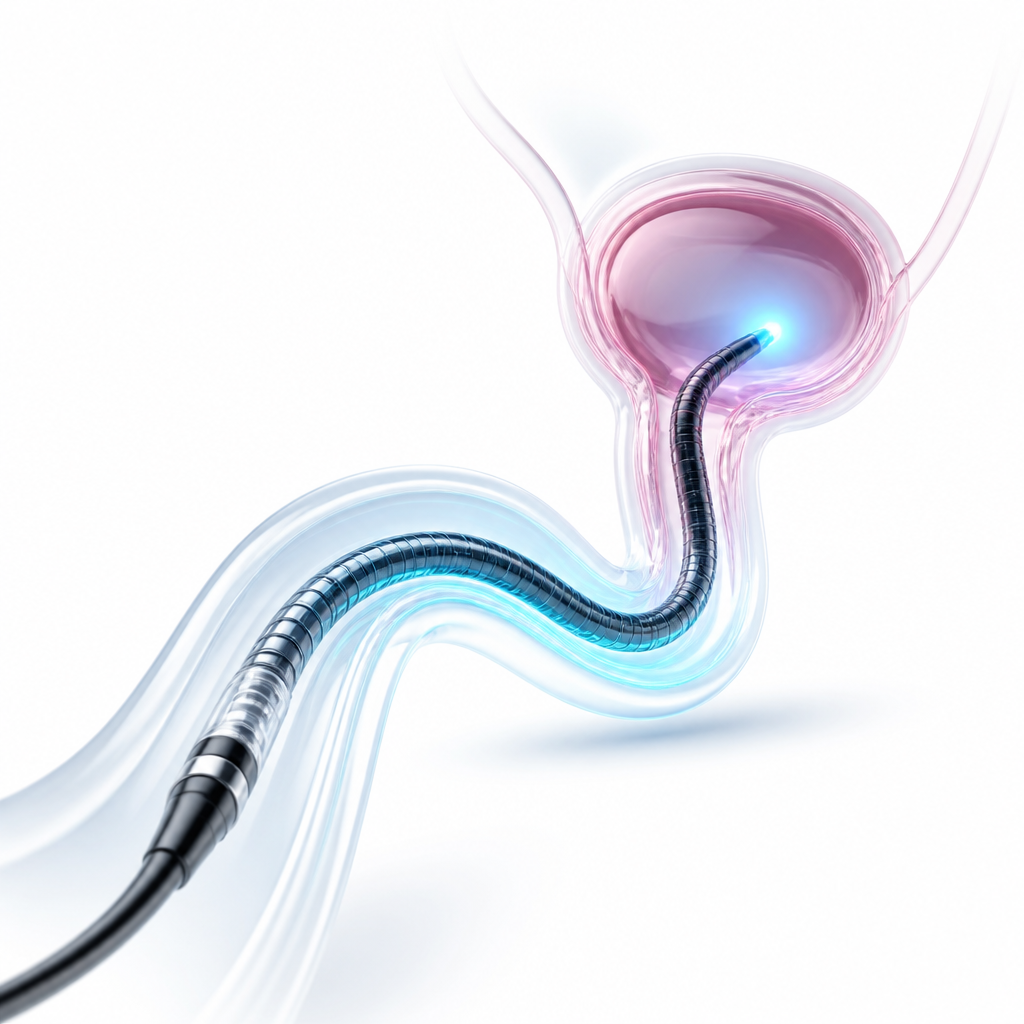
What Are the Key Indications for an Urgent Cystoscopy?
While conservative management, such as urinalysis, urine cytology, and voided urine biomarkers (e.g., NMP22), is reasonable for initial evaluation, these tests have limited sensitivity. They cannot reliably rule out early-stage carcinoma in situ (CIS) or small papillary lesions. Therefore, direct visualization remains the gold standard. Patients should monitor for key indications to determine the necessity of an immediate diagnostic workup.
- Unexplained microscopic or macroscopic hematuria (blood in the urine).
- Persistent irritative voiding symptoms, such as frequency or urgency, without active infection.
- Abnormal findings in non-invasive imaging (ultrasound, CT scan, or MRI).
- Regular surveillance for patients with a personal history of bladder cancer.
- Evaluation of suspected bladder fistulas or bladder outlet obstruction.
Diagnostic Decision-Making Flow:
- Step 1 (Symptom/Risk Presentation): Patient exhibits unexplained hematuria or risk factors for urothelial carcinoma.
- Step 2 (Initial Workup): Perform non-invasive tests (urinalysis, cytology) to rule out active infection.
- Step 3 (Definitive Screening): Proceed directly to comfort-optimized flexible cystoscopy if symptoms persist or cytology is suspicious, ensuring early and accurate detection.
Frequently Asked Questions FAQ
QDoes flexible cystoscopy require general anesthesia?
No, flexible cystoscopy is typically performed under local anesthesia using a sterile lidocaine gel inserted directly into the urethra. This provides effective numbing, allowing the procedure to be completed comfortably in an outpatient setting without the risks or recovery time of general anesthesia.
QWhat are the common minor side effects of the screening?
Patients may experience mild burning during urination, temporary urinary frequency, or slight pink-tinged urine for 24 to 48 hours after the procedure. Drinking plenty of fluids helps flush the urinary tract and resolve these symptoms quickly.
QHow reliable is flexible cystoscopy compared to other bladder imaging?
Flexible cystoscopy is the absolute gold standard for detecting flat mucosal lesions (carcinoma in situ) that are frequently missed by ultrasound, CT scans, or MRI, achieving an overall diagnostic accuracy rate exceeding 95% in clinical surveillance cohorts.

This content is general medical information, and individual treatment decisions should be made through imaging tests and in-person medical evaluation.
Author: Medical content editor based on medical information research
Reviewed by: Specialist consultation from the relevant department
Last reviewed: 2026-06-23
Reference guideline: 2023 American Urological Association (AUA) / Society of Urologic Oncology (SUO) Guideline on Microscopic Hematuria
Medical neutrality and closing note
The core of medical decision-making is not to follow a specific device or a trending procedure, but to choose an option that fits each patient’s individual anatomy, condition, risk level, and treatment goals. Every procedure has both advantages and limitations, so decisions should be made after sufficient discussion with an experienced specialist.
[Medical information and copyright notice]
This content is a professional medical column prepared based on medical consultation from 굿모닝비뇨기과.
The infographics used in this article are created to support understanding and may differ from actual clinical results.
The information provided is a general medical guideline, and accurate diagnosis and treatment require an in-person evaluation by a qualified specialist.